Following TATA's NANO - the cheapest vehicle, now India is again in news for the cheapest tablet PC. Tablet PC is the smallest form of computer. The Indian Tablet PC named as Sakshat is meant for Educational purposes, mainly.
Kapil Sibal, India Human Resource Development Minister has unveiled preview with its earlier prototype available for showcase. The tablet PC will boast WiFi, and Touchscreen as main features. Considering the Hardware, Battery power and Price constraints, the device will be preloaded with Android Operating System which is increasingly gaining its popularity in handheld and mobile segments.
With its official release date in 2011, the government hopes to further reduce the price to $10-20 with subsidize and mass volume production by that time.
The tablet PC Sakshat is suitable for Internet browsing, reading e-books and viewing Multimedia.
Showing posts with label New. Show all posts
Showing posts with label New. Show all posts
Wednesday, July 28, 2010

Monday, March 2, 2009
Create hidden private storage area on Pen Drives and Hard Disks - SafeHouse Explorer
If you want to protect your personal data from curious eyes, you need to hide and encrypt it on your USB memory stick, local hard drive or any removable media like ipod. In this way nobody can view it without your permission. Here is a free, reliable application, SafeHouse Explorer which hides, locks and encrypts any documents, spreadsheets, photos, videos and anything else. It uses super strong 128-bit advanced encryption technology which ensures total protection of your data. Moreover unlike other similar product, you can create unlimited number of private storage vaults as large as 2,000 GB each.
SafeHouse Explorer works with Windows 2000, XP, Vista, Server 2003, 2008 and
64-bit XP/Vista/Server and very easy to use. You can drag and drop file on to SafeHouse Explorer window for encrypting it (After creating a private storage vault). Your files are completely invisible until you enter your password. After you enter your secret password, you access your files using SafeHouse Explorer's familiar drag-and-drop Explorer-like interface.
With SafeHouse Explorer, you can protect any files residing on any drive, including memory sticks, external USB drives, network servers, CD/DVDs and even iPods.
Features of this 100% free, full featured application include:
* Complete full-featured stand-alone security solution.
* Hides, locks and encrypts documents, spreadsheets, photos, videos and anything else.
* Perfect for USB memory sticks and other portable media - even iPods
* Super strong 128-bit advanced encryption ensures your total protection.
* Unlimited number of private storage vaults as large as 2,000 Gigabytes each.
* Graphical password strength meter helps you choose strong passwords.
* Can be run directly from USB memory sticks without prior Windows installation.
Download SafeHouse Explorer from here
SafeHouse Explorer works with Windows 2000, XP, Vista, Server 2003, 2008 and
64-bit XP/Vista/Server and very easy to use. You can drag and drop file on to SafeHouse Explorer window for encrypting it (After creating a private storage vault). Your files are completely invisible until you enter your password. After you enter your secret password, you access your files using SafeHouse Explorer's familiar drag-and-drop Explorer-like interface.
With SafeHouse Explorer, you can protect any files residing on any drive, including memory sticks, external USB drives, network servers, CD/DVDs and even iPods.
Features of this 100% free, full featured application include:
* Complete full-featured stand-alone security solution.
* Hides, locks and encrypts documents, spreadsheets, photos, videos and anything else.
* Perfect for USB memory sticks and other portable media - even iPods
* Super strong 128-bit advanced encryption ensures your total protection.
* Unlimited number of private storage vaults as large as 2,000 Gigabytes each.
* Graphical password strength meter helps you choose strong passwords.
* Can be run directly from USB memory sticks without prior Windows installation.
Download SafeHouse Explorer from here
Sunday, February 1, 2009
Rs 500 laptop display on Feb 3
NEW DELHI: A $10 laptop (Rs 500) prototype, with 2 GB RAM capacity, would be on display in Tirupati on February 3 when the National Mission on
Education through Information and Communication Techology is launched.
The $10 laptop project, first reported in TOI three years ago, has come as an answer to the $100 laptop of MIT's Nicholas Negroponte that he was trying to hardsell to India. The $10 laptop has come out of the drawing board stage due to work put in by students of Vellore Institute of Technology, scientists in Indian Institute of Science, Bangalore, IIT-Madras and involvement of PSUs like Semiconductor Complex. “At this stage, the price is working out to be $20 but with mass production it is bound to come down,” R P Agarwal, secretary, higher education said.
Apart from questioning the technology of $100 laptops, the main reason for HRD ministry's resistance to Negroponte's One Laptop Per Child (OLPC) project was the high and the hidden cost that worked out to be $200.
The mission launch would also see demonstration of e-classroom, virtual laboratory and a better 'Sakshat' portal that was launched more than two years ago. Sources also said that the ministry has entered into an agreement with four publishers — Macmillan, Tata McGraw Hill, Prentice-Hall and Vikas Publishing — to upload their textbooks on 'Sakshat'. Five per cent of these books can be accessed free.
The mission, with an 11th plan outlay of Rs 4,612 crore, is aimed at making a serious intervention in enhancing the Gross Enrolment Ratio in higher education. The mission has two major components. One, content generation through its portal 'Sakshat', and two, building connectivity along with providing access devices for institutions and learners.
In this context, government would give Rs 2.5 lakh per institution for 10 Kbps connection and subsidise 25% of costs for private and state government colleges.
The mission would seek to extend computer infrastructure and connectivity to over 18,000 colleges in the country, including each department of nearly 400 universities and institutions of national importance. The mission would focus on appropriate e-learning procedures, providing facility of performing experiments through virtual laboratories, online testing and certification, online availability of teachers to guide and mentor learners, and utilization of EduSat and DTH.
Education through Information and Communication Techology is launched.
The $10 laptop project, first reported in TOI three years ago, has come as an answer to the $100 laptop of MIT's Nicholas Negroponte that he was trying to hardsell to India. The $10 laptop has come out of the drawing board stage due to work put in by students of Vellore Institute of Technology, scientists in Indian Institute of Science, Bangalore, IIT-Madras and involvement of PSUs like Semiconductor Complex. “At this stage, the price is working out to be $20 but with mass production it is bound to come down,” R P Agarwal, secretary, higher education said.
Apart from questioning the technology of $100 laptops, the main reason for HRD ministry's resistance to Negroponte's One Laptop Per Child (OLPC) project was the high and the hidden cost that worked out to be $200.
The mission launch would also see demonstration of e-classroom, virtual laboratory and a better 'Sakshat' portal that was launched more than two years ago. Sources also said that the ministry has entered into an agreement with four publishers — Macmillan, Tata McGraw Hill, Prentice-Hall and Vikas Publishing — to upload their textbooks on 'Sakshat'. Five per cent of these books can be accessed free.
The mission, with an 11th plan outlay of Rs 4,612 crore, is aimed at making a serious intervention in enhancing the Gross Enrolment Ratio in higher education. The mission has two major components. One, content generation through its portal 'Sakshat', and two, building connectivity along with providing access devices for institutions and learners.
In this context, government would give Rs 2.5 lakh per institution for 10 Kbps connection and subsidise 25% of costs for private and state government colleges.
The mission would seek to extend computer infrastructure and connectivity to over 18,000 colleges in the country, including each department of nearly 400 universities and institutions of national importance. The mission would focus on appropriate e-learning procedures, providing facility of performing experiments through virtual laboratories, online testing and certification, online availability of teachers to guide and mentor learners, and utilization of EduSat and DTH.
Saturday, January 24, 2009
Acer updates Aspire One netbook
New model has 10.1in screen and is XP-only
Acer has unveiled a new version of its Aspire One mini laptop with a larger screen and more memory.
Widely regarded as one of the more polished mini laptops launched in the wake of the Asus Eee PC, the Aspire had an 8.9in display and could only be fitted with up to 1.5Gb memory.
The new Aspire One ships with a 1,024 x 600 10.1in screen and can be fitted with up to 2Gb of memory. As with earlier models and most other so-called netbooks, it is based on Intel's 1.6GHz Atom processor.
However, while the original Aspire was available in versions with Linpus Linux, the new model appears to be available only with Windows XP. Also out is any mention of Flash SSD storage options, with the new specifications listing only a 160GB 2.5in hard drive.
Acer said that the new Aspire One combines style, great features and a new form factor to provide the best combination of ultra-portability and maximum screen size for navigation and data input.
As well as 802.11b/g Wi-Fi and Bluetooth, the Aspire one can be fitted with an optional internal 3G broadband modem, or a WiMax adapter in territories where there are such networks available.
Acer has kept the starting weight down to 1.18kg, but this is with the standard three-cell battery pack which will deliver up to three hours of use. Two larger six-cell packs are available, one rated at 4400mAh for up to six hours use, the other rated at 5200mAh for up to seven hours. Choosing one of these bumps the weight up to 1.33kg.
The new Acer Aspire One is expected to be available in February, but no pricing information was available at the time of writing.
Acer has unveiled a new version of its Aspire One mini laptop with a larger screen and more memory.
Widely regarded as one of the more polished mini laptops launched in the wake of the Asus Eee PC, the Aspire had an 8.9in display and could only be fitted with up to 1.5Gb memory.
The new Aspire One ships with a 1,024 x 600 10.1in screen and can be fitted with up to 2Gb of memory. As with earlier models and most other so-called netbooks, it is based on Intel's 1.6GHz Atom processor.
However, while the original Aspire was available in versions with Linpus Linux, the new model appears to be available only with Windows XP. Also out is any mention of Flash SSD storage options, with the new specifications listing only a 160GB 2.5in hard drive.
Acer said that the new Aspire One combines style, great features and a new form factor to provide the best combination of ultra-portability and maximum screen size for navigation and data input.
As well as 802.11b/g Wi-Fi and Bluetooth, the Aspire one can be fitted with an optional internal 3G broadband modem, or a WiMax adapter in territories where there are such networks available.
Acer has kept the starting weight down to 1.18kg, but this is with the standard three-cell battery pack which will deliver up to three hours of use. Two larger six-cell packs are available, one rated at 4400mAh for up to six hours use, the other rated at 5200mAh for up to seven hours. Choosing one of these bumps the weight up to 1.33kg.
The new Acer Aspire One is expected to be available in February, but no pricing information was available at the time of writing.
Wednesday, January 14, 2009
Next Generation SDXC (eXtended Capacity) Memory Card Delivering Up To 2TB Massive Storage
The global ecosystem of more than 1,100 technology companies charged with setting interoperable SD standards, SD Association, has developed the next-generation SDXC (eXtended Capacity) memory card specification, which provides up to 2TB (terabytes) massive storage capacity with read/write speeds to 104MB/s this year, aiming to provide users larger capacity and faster transfer speeds for expanded entertainment and data storage.
“SDXC combines a higher capacity roadmap with faster transfer speeds as a means to exploit NAND flash memory technology as a compelling choice for portable memory storage and interoperability,” said Joseph Unsworth, research director, NAND Flash Semiconductors, at Gartner. “With industry support, SDXC presents manufacturers with the opportunity to kindle consumer demand for more advanced handset features and functionality in consumer electronics behind the ubiquitous SD interface.”
“With SDXC, consumers can quickly download higher quality content to their phones, including games, video and music – giving consumers a richer media and content experience,” said James Taylor, president of the SD Association. “The SD interface already has proven itself valuable in mobile phones. Now, SDXC memory card capabilities will spur further handset sophistication and boost consumer content demand.”
“SDXC is a large-capacity card that can store more than 4,000 RAW images, which is the uncompressed mode professionals use, and 17,000 of the fine-mode most consumers use. That capacity, combined with the exFAT file system, increases movie recording time and reduces starting time to improve photo-capturing opportunities,” said Shigeto Kanda, general manager of Canon. “Improvements in interface speed allow further increases in continuous shooting speed and higher resolution movie recordings. As a memory card well suited to small-sized user-friendly digital cameras, the SDXC specification will help consumers realize the full potential of our cameras.”
“SDXC combines a higher capacity roadmap with faster transfer speeds as a means to exploit NAND flash memory technology as a compelling choice for portable memory storage and interoperability,” said Joseph Unsworth, research director, NAND Flash Semiconductors, at Gartner. “With industry support, SDXC presents manufacturers with the opportunity to kindle consumer demand for more advanced handset features and functionality in consumer electronics behind the ubiquitous SD interface.”
“With SDXC, consumers can quickly download higher quality content to their phones, including games, video and music – giving consumers a richer media and content experience,” said James Taylor, president of the SD Association. “The SD interface already has proven itself valuable in mobile phones. Now, SDXC memory card capabilities will spur further handset sophistication and boost consumer content demand.”
“SDXC is a large-capacity card that can store more than 4,000 RAW images, which is the uncompressed mode professionals use, and 17,000 of the fine-mode most consumers use. That capacity, combined with the exFAT file system, increases movie recording time and reduces starting time to improve photo-capturing opportunities,” said Shigeto Kanda, general manager of Canon. “Improvements in interface speed allow further increases in continuous shooting speed and higher resolution movie recordings. As a memory card well suited to small-sized user-friendly digital cameras, the SDXC specification will help consumers realize the full potential of our cameras.”
Monday, January 5, 2009
The Future of Your PC's Hardware - Memristor: A Groundbreaking New Circuit
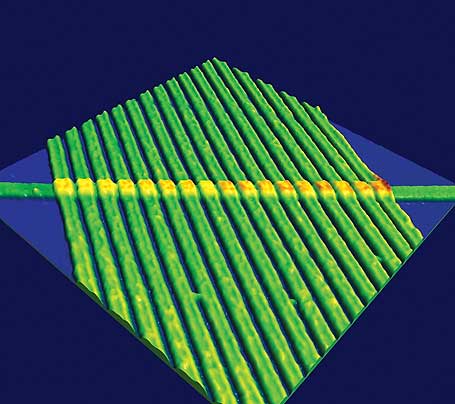
Since the dawn of electronics, we've had only three types of circuit components--resistors, inductors, and capacitors. But in 1971, UC Berkeley researcher Leon Chua theorized the possibility of a fourth type of component, one that would be able to measure the flow of electric current: the memristor. Now, just 37 years later, Hewlett-Packard has built one.
What is it? As its name implies, the memristor can "remember" how much current has passed through it. And by alternating the amount of current that passes through it, a memristor can also become a one-element circuit component with unique properties. Most notably, it can save its electronic state even when the current is turned off, making it a great candidate to replace today's flash memory.
Memristors will theoretically be cheaper and far faster than flash memory, and allow far greater memory densities. They could also replace RAM chips as we know them, so that, after you turn off your computer, it will remember exactly what it was doing when you turn it back on, and return to work instantly. This lowering of cost and consolidating of components may lead to affordable, solid-state computers that fit in your pocket and run many times faster than today's PCs.
Someday the memristor could spawn a whole new type of computer, thanks to its ability to remember a range of electrical states rather than the simplistic "on" and "off" states that today's digital processors recognize. By working with a dynamic range of data states in an analog mode, memristor-based computers could be capable of far more complex tasks than just shuttling ones and zeroes around.
When is it coming? Researchers say that no real barrier prevents implementing the memristor in circuitry immediately. But it's up to the business side to push products through to commercial reality. Memristors made to replace flash memory (at a lower cost and lower power consumption) will likely appear first; HP's goal is to offer them by 2012. Beyond that, memristors will likely replace both DRAM and hard disks in the 2014-to-2016 time frame. As for memristor-based analog computers, that step may take 20-plus years.
Saturday, January 3, 2009
BSNL, Novatium roll out low-cost computer
‘Nova netPC’ is available in two packages of Rs.1,999 and Rs.2,999
Bharat Sanchar Nigam Limited (BSNL) and Chennai-based IT solutions company Novatium on Friday rolled out a low-cost home computing device that could help the former achieve a target of 9 million broadband connections across the country in the next couple of years.
At a press conference after the launch of “Nova netPC” on the BSNL’s network, Chairman and Managing Director of BSNL Kuldeep Goyal said affordability issues over buying a desktop PC or laptop would no longer stand in the way of broadband penetration, especially in rural areas.
Essentially, the user is provided with a set top box, keyboard and mouse while most hardware functions of a computer will be managed by a central server. Most of the widely used applications will be available to the user. The central server will facilitate access to the BSNL’s broadband conduit, for which the user will need to subscribe to any of the DataOne monthly plans.
Nova netPC, available in two packages (down payment of Rs.1,999 and a monthly charge of Rs.199, and an upfront fee of Rs.2,999 and monthly subscription of Rs.175), is available at BSNL’s outlets in the city.
Mr. Goyal said the total number of broadband users in the country was only 5.25 million, which was less than 1 per cent of the population. In developed societies, the penetration levels were as high as 60 per cent or more.
BSNL aimed to account for about 60 per cent of the 20 million broadband connections stipulated as target for 2010 by the government. BSNL, which now has 3 million broadband users, has equipped at a cost of Rs.1,600 crore 23,000 of its network of 30,000 telephone exchanges for broadband connectivity. BSNL enjoyed a 56 per cent market share in the broadband space, he pointed out.
“Negotiations with the Universal Service Obligation Fund, a body mandated with scaling up rural telephony, are in an advanced stage on providing near-free broadband tariffs and subsidised customer end equipment for rural users,” he said.
3G technology
BSNL’s plans for the immediate future include rollout of 3G technology on its GSM network (the national launch planned from Chennai now has been rescheduled to February), providing broadband on optic fibre for high-end users and facilitating wireless broadband (WiMAX) in 1,000 rural blocks.
Advance purchase orders for WiMAX equipment had been placed with suppliers.
Novatium CEO Alok Singh said the link-up with BSNL fitted in with the company’s vision of making computing simple and affordable and taking broadband to the nook and corner of the country.
The netPC, which is protected with 11 global patents, had been around for over a year in Delhi and would shortly go commercial. In addition to 1,000 users in the capital, the netPC had been launched in Mauritius. In Chennai, where BSNL issued 8,000 new connections a month, Novatium targeted a sale of 1,000 units by January end.
Post-launch, Nova netPC devices were distributed to four BSNL customers.
Bharat Sanchar Nigam Limited (BSNL) and Chennai-based IT solutions company Novatium on Friday rolled out a low-cost home computing device that could help the former achieve a target of 9 million broadband connections across the country in the next couple of years.
At a press conference after the launch of “Nova netPC” on the BSNL’s network, Chairman and Managing Director of BSNL Kuldeep Goyal said affordability issues over buying a desktop PC or laptop would no longer stand in the way of broadband penetration, especially in rural areas.
Essentially, the user is provided with a set top box, keyboard and mouse while most hardware functions of a computer will be managed by a central server. Most of the widely used applications will be available to the user. The central server will facilitate access to the BSNL’s broadband conduit, for which the user will need to subscribe to any of the DataOne monthly plans.
Nova netPC, available in two packages (down payment of Rs.1,999 and a monthly charge of Rs.199, and an upfront fee of Rs.2,999 and monthly subscription of Rs.175), is available at BSNL’s outlets in the city.
Mr. Goyal said the total number of broadband users in the country was only 5.25 million, which was less than 1 per cent of the population. In developed societies, the penetration levels were as high as 60 per cent or more.
BSNL aimed to account for about 60 per cent of the 20 million broadband connections stipulated as target for 2010 by the government. BSNL, which now has 3 million broadband users, has equipped at a cost of Rs.1,600 crore 23,000 of its network of 30,000 telephone exchanges for broadband connectivity. BSNL enjoyed a 56 per cent market share in the broadband space, he pointed out.
“Negotiations with the Universal Service Obligation Fund, a body mandated with scaling up rural telephony, are in an advanced stage on providing near-free broadband tariffs and subsidised customer end equipment for rural users,” he said.
3G technology
BSNL’s plans for the immediate future include rollout of 3G technology on its GSM network (the national launch planned from Chennai now has been rescheduled to February), providing broadband on optic fibre for high-end users and facilitating wireless broadband (WiMAX) in 1,000 rural blocks.
Advance purchase orders for WiMAX equipment had been placed with suppliers.
Novatium CEO Alok Singh said the link-up with BSNL fitted in with the company’s vision of making computing simple and affordable and taking broadband to the nook and corner of the country.
The netPC, which is protected with 11 global patents, had been around for over a year in Delhi and would shortly go commercial. In addition to 1,000 users in the capital, the netPC had been launched in Mauritius. In Chennai, where BSNL issued 8,000 new connections a month, Novatium targeted a sale of 1,000 units by January end.
Post-launch, Nova netPC devices were distributed to four BSNL customers.
Saturday, September 13, 2008
Large Hadron Collider Goes Online
For the purpose of this story, let's call this section Past Watch, for that is the purpose of the controversial Large Hadron Collider (LHC). This 27-kilometre circular tunnel will serve as the arena for some serious atom-smashing, and will give us more insight into what precisely happened when the universe began. It's also, incidentally, been accused of heralding its end--scientists have battled death threats to get this behemoth up and running.
On Wednesday, the team of scientists at CERN, Switzerland, gave the LHC its first test run, successfully sending a beam of particles all the way round the tunnel at 99.999998 percent of the speed of light. In October, two such beams will be made to collide at similar speeds, and the researchers hope to recreate the first few seconds of the big bang. The reaction may reveal new dimensions, dark matter, and what is known as the "God particle"--the Higgs boson. The particle is the only one in the Standard Model of particle physics to have never been observed, and is thought to be the reason that particles (and hence us) have mass.
With a statement like "recreate the big bang", it's hard not to think of this as the end of the world--the last big bang was pretty darn big, we've been told. However, the scientists are quick to point out that this is a controlled environment, and we aren't likely to see a new universe create itself.
And if they're wrong, what can you do?
On Wednesday, the team of scientists at CERN, Switzerland, gave the LHC its first test run, successfully sending a beam of particles all the way round the tunnel at 99.999998 percent of the speed of light. In October, two such beams will be made to collide at similar speeds, and the researchers hope to recreate the first few seconds of the big bang. The reaction may reveal new dimensions, dark matter, and what is known as the "God particle"--the Higgs boson. The particle is the only one in the Standard Model of particle physics to have never been observed, and is thought to be the reason that particles (and hence us) have mass.
With a statement like "recreate the big bang", it's hard not to think of this as the end of the world--the last big bang was pretty darn big, we've been told. However, the scientists are quick to point out that this is a controlled environment, and we aren't likely to see a new universe create itself.
And if they're wrong, what can you do?
Tuesday, August 5, 2008
BSNL Online Video (IPTV) in Jaipur
BSNL and Aksh Optifibre have announced the launch of icontrol, an IPTV service, in the Pink City of Jaipur. This announcement comes a month after its launch in Mumbai and Delhi. icontrol will be the first IPTV service in Rajasthan state.
icontrol is a television connection that allows users to watch programmes at their convenience. This means that users will receive a programme when they put in a request for it. The service claims to offer more than 120 channels, and an extensive movie library consisting of Hollywood and Bollywood titles at no extra cost.
In addition, the service also has A-Tube-Video Classified pages feature that offers users solutions to day-to-day requirements from lifestyle, to travel, and includes restaurants, schools, beauty parlors, even plumbers!
The icontrol service in Jaipur is priced at Rs 150 per month for BSNL Broadband subscribers. The set-up box will be provided for free against a refundable security deposit of Rs 999.
icontrol is a television connection that allows users to watch programmes at their convenience. This means that users will receive a programme when they put in a request for it. The service claims to offer more than 120 channels, and an extensive movie library consisting of Hollywood and Bollywood titles at no extra cost.
In addition, the service also has A-Tube-Video Classified pages feature that offers users solutions to day-to-day requirements from lifestyle, to travel, and includes restaurants, schools, beauty parlors, even plumbers!
The icontrol service in Jaipur is priced at Rs 150 per month for BSNL Broadband subscribers. The set-up box will be provided for free against a refundable security deposit of Rs 999.
DoT Announces 3G, WiMax Policy Overview
Finally, after a long wait, DoT announced the guidelines for the auction of allotment of spectrum for 3G and WiMax in the country. While spectrum in 2.1 GHz band was allocated for 3G auction, 2.5GHz and 2.3GHz spectrum bands were identified for WiMax. These services are expected to rollout in mid-2009.
In the case of 3G, the successful bidders will be allotted the spectrum for 20 years. Up to 10 players will be allowed in the 3G space, which includes foreign players. Those holding a UASL (Universal Access Service License), and have previous experience of running 3G services can bid for the spectrum.
In the first year of operation, operators will be exempted from the annual spectrum charge of 1% of the Adjusted Gross Revenue. Meanwhile, rollout obligations include covering 90% of metro area's within 5 years from date of spectrum allocation.
Some of the guidelines for WiMax spectrum allocation are similar to 3G, such as allowing UASL holders to bid and exempting operators from the annual spectrum charge of 1% in the first year.
In the case of 3G, the successful bidders will be allotted the spectrum for 20 years. Up to 10 players will be allowed in the 3G space, which includes foreign players. Those holding a UASL (Universal Access Service License), and have previous experience of running 3G services can bid for the spectrum.
In the first year of operation, operators will be exempted from the annual spectrum charge of 1% of the Adjusted Gross Revenue. Meanwhile, rollout obligations include covering 90% of metro area's within 5 years from date of spectrum allocation.
Some of the guidelines for WiMax spectrum allocation are similar to 3G, such as allowing UASL holders to bid and exempting operators from the annual spectrum charge of 1% in the first year.
Wednesday, July 2, 2008
Machine claims to get water out of thin air
With all due respector to inventor extraordinaire Dean Kamen, the notion of his "Slingshot" distillation system--which makes drinkable water from any type of liquid, including bodily fluids--has been met with more than a few squeamish responses. For those seeking a more palatable solution, the "Base 1 AirWater Machine" taps into a very different source: the air.
Its manufacturer, a Greek company called Klimatic, claims that the system can extract 5 gallons of water every 24 hours, according to Dvice, which adds: "It cleans the extracted water with an active carbon filter, runs it through an ultraviolet light chamber to kill bacteria, and then serves it up to you hot or chilled."
The question, however, is what kind of power source is needed to make the system both energy- and cost-effective. If you need something sooner--as in, an emergency--don't forget about the "LifeStraw" and the "Lifesaver" bottle.
Now Yoga Lessons on your Mobile
If you don't have time for an exercise regimen and are experiencing guilt pangs because of it (or the lack of), you might want to give this one a shot. Shemaroo has tied up with various mobile operators in India to offer actor Shilpa Shetty's Yoga for download to mobile customers.
Shemaroo says that the videos have been cut and edited such that each video captures one complete Asana. In Yoga, Asanas (postures) are categorized according to the benefits they provide like those for the back, stomach, neck and shoulder, and of course Pranayam (breathing exercises).
Also on offer are detailed write-ups explaining the benefits and description/s of each Asana. Apart from these videos, consumers can download Shilpa Shetty in her Yoga poses as their mobile wall-papers and screen-savers.
Vodafone is offering a pack of Rs 99, wherein the user can download unlimited Shilpa's Yoga videos in one hour. The pack also contains a step-by-step procedure for each Asana. Similarly, Airtel, Tata, Reliance, BPL, and Idea are also offering Shilpa's Yoga content for download as a value-added service (VAS). Additionally, consumers can purchase the complete DVD for Shilpa's Yoga after sampling the videos on their mobile phones. Shilpa's Yoga Mobile downloads are also available at: http://wap.shemaroo.com.
Shemaroo says that the videos have been cut and edited such that each video captures one complete Asana. In Yoga, Asanas (postures) are categorized according to the benefits they provide like those for the back, stomach, neck and shoulder, and of course Pranayam (breathing exercises).
Also on offer are detailed write-ups explaining the benefits and description/s of each Asana. Apart from these videos, consumers can download Shilpa Shetty in her Yoga poses as their mobile wall-papers and screen-savers.
Vodafone is offering a pack of Rs 99, wherein the user can download unlimited Shilpa's Yoga videos in one hour. The pack also contains a step-by-step procedure for each Asana. Similarly, Airtel, Tata, Reliance, BPL, and Idea are also offering Shilpa's Yoga content for download as a value-added service (VAS). Additionally, consumers can purchase the complete DVD for Shilpa's Yoga after sampling the videos on their mobile phones. Shilpa's Yoga Mobile downloads are also available at: http://wap.shemaroo.com.
Friday, June 27, 2008
Lost the remote? Use your face
A researcher has discovered a way to use facial expressions to speed and slow video playback.
By using a combination of facial expression recognition software and automated tutoring technology Jacob Whitehill, a computer science Ph.D. student from UC San Diego's Jacobs School of Engineering, is leading the project that ultimately is part of a larger venture to use automated facial expression recognition to make robots more effective teachers.
The researchers recently conducted a pilot test with 8 people that demonstrated information within the facial expressions people make while watching recorded video lectures can be used to predict a person's preferred viewing speed of the video and how difficult a person perceives the lecture at each moment in time.
"If I am a student dealing with a robot teacher and I am completely puzzled and yet the robot keeps presenting new material, that's not going to be very useful to me. If, instead, the robot stops and says, 'Oh, maybe you're confused,' and I say, 'Yes, thank you for stopping,' that's really good," said Whitehill in a release.
Recent advances in the fields of pattern recognition, computer vision, and machine learning have made automatic facial expression recognition in real-time a viable resource for intelligent tutoring systems (ITS), researchers added. As facial expression recognition technology improves in accuracy, the range of its application will grow. One particular application we are currently developing is a \smart video player" which modulates the video speed in real-time based on the user's facial expression so that the rate of lesson presentation is optimal for the current user, researchers said.
In the pilot study, researcher said the facial movements people made when they perceived the lecture to be difficult varied widely from person to person. Most of the 8 test subjects, however, blinked less frequently during difficult parts of the lecture than during easier portions of the lecture, which is supported by findings in psychology.
One of the next steps for this project is to determine what facial movements one person naturally makes when they are exposed to difficult or easy lecture material. From here, researchers could train a user specific model that predicts when a lecture should be sped up or slowed down based on the spontaneous facial expressions a person makes.
The goal of UC San Diego's Machine Perception Laboratory is to gain insights into how the brain works by developing systems that perceive and interact with humans in real time using natural communication channels. Researchers are also developing algorithms for robots that develop and learn to interact with people on their own. Applications include personal robots, perceptive tutoring systems, and system for clinical assessment, monitoring, and intervention.
Wednesday, June 25, 2008
Updates come for CorelDRAW X4
A service pack became available Tuesday for CorelDRAW Graphics Suite X4 illustration and desktop publishing applications.
Corel's updates add support for more than 25 new camera RAW formats. The company also aimed to iron out some graphic design workflows.
"With this service pack for CorelDRAW Graphics Suite X4, we have focused on addressing the major feedback provided by our users," said Gerard Metrailler, senior director of Corel's graphics product management.
Users can obtain the updates automatically via the installed software, or by visiting Corel.com. A free trial of the suite is also available.
CorelDRAW Graphics Suite X4 includes CorelDRAW for illustration and page layout, PhotoPaint for photo editing, and PowerTRACE for bitmap-to-vector tracing. The package, considered a competitor to the more expensive Adobe Illustrator and InDesign CS3, works on Windows Vista and XP systems.
Corel also sells the image applications Painter and PaintShop Pro, as well as WordPerfect X4, a competitor to Microsoft Office.
Earlier in June, the Ottawa, Ontario-based company announced an early preview of its Designer Technical Suite X4, which includes CAD 3D and AutoCAD compatibilityTuesday, June 24, 2008
Bundle Offer: Get Virgin Mobile's vTrendy With Lifetime Validity
Priced at Rs 1,499, the new vTrendy handset includes one-touch access to Vbytes -- Virgin Mobile’s VAS data portal.
Monday, June 23, 2008: Virgin Mobile has introduced its vTrendy handset - a colour screen phone loaded with FM radio. With every vTrendy phone, users will get lifetime validity recharge and a starter user kit. Weighing 65gms, vTrendy is loaded with features which include one-touch access to Vbytes - Virgin Mobile’s data portal, speaker phone, organiser, phonebook memory of 500 contacts and additional 150 contacts on RUIM (SIM) card, to name a few.
Commenting on the launch, P Madhavan, chief sales and distribution officer, Virgin Mobile India, said, “Youth today are faced with a situation where they have no stylish CDMA handsets in the price range of below Rs 1,500. Even a GSM service provider’s handset bundled offer does not really appeal to them because of lack of attractive handsets. vTrendy is a ‘no compromise deal for youth’ since it combines a stylish handset to suit their budget, is loaded with features such as FM radio, 65K colour and long messaging service (LMS) and is bundled with an offer tailored just for them.”
According to Deval Parikh, chief officer, handsets, VAS and procurement, Virgin Mobile India, “This stylish looking, light weighted, sleek and feature rich handset has been especially designed to appeal to our young audience who consider personal devices an expression of their style statement amongst their peer group. To add to our users delight, vTrendy has a one-touch access to Vbytes, Virgin Mobile’s VAS data portal, where users can get unlimited access to Virgin Mobile selected content and other applications for a simple charge of Rs 5 per day.”
With a price tag of Rs 1,499, vTrendy is available across 15,000 outlets nationally and over 1,000 modern retail outlets including The Mobile Store, Univercell, Croma, Convergem, Big C, Vishal Mega Mart, Vijay Sales and Sangeetha, to name a few. Apart from this, the handset will be made available in 34 kiosks in high traffic malls across the country.
Monday, June 23, 2008: Virgin Mobile has introduced its vTrendy handset - a colour screen phone loaded with FM radio. With every vTrendy phone, users will get lifetime validity recharge and a starter user kit. Weighing 65gms, vTrendy is loaded with features which include one-touch access to Vbytes - Virgin Mobile’s data portal, speaker phone, organiser, phonebook memory of 500 contacts and additional 150 contacts on RUIM (SIM) card, to name a few.
Commenting on the launch, P Madhavan, chief sales and distribution officer, Virgin Mobile India, said, “Youth today are faced with a situation where they have no stylish CDMA handsets in the price range of below Rs 1,500. Even a GSM service provider’s handset bundled offer does not really appeal to them because of lack of attractive handsets. vTrendy is a ‘no compromise deal for youth’ since it combines a stylish handset to suit their budget, is loaded with features such as FM radio, 65K colour and long messaging service (LMS) and is bundled with an offer tailored just for them.”
According to Deval Parikh, chief officer, handsets, VAS and procurement, Virgin Mobile India, “This stylish looking, light weighted, sleek and feature rich handset has been especially designed to appeal to our young audience who consider personal devices an expression of their style statement amongst their peer group. To add to our users delight, vTrendy has a one-touch access to Vbytes, Virgin Mobile’s VAS data portal, where users can get unlimited access to Virgin Mobile selected content and other applications for a simple charge of Rs 5 per day.”
With a price tag of Rs 1,499, vTrendy is available across 15,000 outlets nationally and over 1,000 modern retail outlets including The Mobile Store, Univercell, Croma, Convergem, Big C, Vishal Mega Mart, Vijay Sales and Sangeetha, to name a few. Apart from this, the handset will be made available in 34 kiosks in high traffic malls across the country.
Thursday, June 19, 2008
22 Inches TFT LCD Monitors from Intex
Intex Technologies (India) has launched its 22-inches wide-screen TFT LCD monitors; the IT 22 LCT and 2201.
The IT 22 LCT serves a dual purpose: besides being a LCD monitor, it comes with a TV function. HDMI port connectivity provides high-definition video and eight-channel audio entertainment by enabling single cable support for various sources such as set-top boxes, DVD players, video game consoles, and so on. Other features include a 22-inches wide-screen TFT LCD with 1680 x 1050 WXGA resolution, 3 milliseconds response time, and dual speakers. This particular monitor comes for Rs 18,000 (MOP).
The other TFT LCD monitor from Intex, 2201, sans TV Tuner card, is positioned as a user-friendly monitor for gaming, multimedia, and professional purposes. A prominent feature of 2201 is DVI port connectivity providing a single connector for various audio and video formats. Other features are more or less like those of the IT 22 LCT except that the response time is 5 milliseconds. This monitor sports a price tag (MOP) of Rs 12,600.
The IT 22 LCT serves a dual purpose: besides being a LCD monitor, it comes with a TV function. HDMI port connectivity provides high-definition video and eight-channel audio entertainment by enabling single cable support for various sources such as set-top boxes, DVD players, video game consoles, and so on. Other features include a 22-inches wide-screen TFT LCD with 1680 x 1050 WXGA resolution, 3 milliseconds response time, and dual speakers. This particular monitor comes for Rs 18,000 (MOP).
The other TFT LCD monitor from Intex, 2201, sans TV Tuner card, is positioned as a user-friendly monitor for gaming, multimedia, and professional purposes. A prominent feature of 2201 is DVI port connectivity providing a single connector for various audio and video formats. Other features are more or less like those of the IT 22 LCT except that the response time is 5 milliseconds. This monitor sports a price tag (MOP) of Rs 12,600.
Saturday, June 14, 2008
Spice S-525 Launched in India
The Spice Mobile phone company has a launched a new low-priced music phone, the S-525. The handset comes with an FM recording feature that allows users to record their favorite songs at the click of a button, while listening to them on the radio station.
The mobile phone weighs 77g and measures 103.1 x 43.4 x 17.8mm. It sports a 65-K colour TFT screen and has several features such as scheduled on/off, sing-tones, 500 phone-book contacts, speaker phones, among others.
The phone also comes with the "mobile tracker" feature which is useful in case this phone gets stolen. It sends an SMS containing the thief's mobile phone number on another mobile number pre-defined by the owner. In addition, the mobile phone allows users to blacklist certain numbers to stop receiving calls from them.
The S-525 claims to offer up to 4 hours of talk time and up to 200 hours of standby time. Spice S-525 is available for a price of Rs. 2, 099 with a 1-year warranty, with conditions applied.

The mobile phone weighs 77g and measures 103.1 x 43.4 x 17.8mm. It sports a 65-K colour TFT screen and has several features such as scheduled on/off, sing-tones, 500 phone-book contacts, speaker phones, among others.
The phone also comes with the "mobile tracker" feature which is useful in case this phone gets stolen. It sends an SMS containing the thief's mobile phone number on another mobile number pre-defined by the owner. In addition, the mobile phone allows users to blacklist certain numbers to stop receiving calls from them.
The S-525 claims to offer up to 4 hours of talk time and up to 200 hours of standby time. Spice S-525 is available for a price of Rs. 2, 099 with a 1-year warranty, with conditions applied.
Thursday, June 12, 2008
Israeli co invents see through device
Military and rescue operations around the globe will now get a tad easier with the invention of a radar that can see through walls. An Israeli firm, Camero, has developed this technology and already sold it to several army and police forces. The company feels that the device can be beneficial for special unit soldiers or for human operations like locating people trapped in burning buildings, the daily Haaretz reported.
"The idea of seeing through walls has been around since the 1960s, but modern technology is now ripe enough to enable it to happen," Camero's technology director Amir Beeri said. "When we established the company in 2004, we intended to develop sufficiently high vision resolution to allow an untrained user to see through a wall," Beeri said.
Camero's unique radar utilises Ultra Wide Band (UWB), a technology that has come of age recently and with the use of special algorithms can process data picked up by the detector to give a reasonable image of anything behind the wall.
The system made by its competitor, Time Domain, lacks imaging algorithms and is able to reveal only whether there is someone on the other side of the wall, the report said.
The firm's earlier version of the system weighed about 10 kgs and was too clumsy for use, but the new system is smaller, light in weight and meant for use as a quick-to-use tactical tool. The system is capable of penetrating various types of walls, but not solid metal ones like the walls of shipping containers.
The firm's CEO, Aharon Aharon, is optimistic about the future of the technology and says, "Like the Israeli army's night vision system, which was once an expensive product and eventually came into broad, general use, we hope that our radar too will become standard issue for all military units."
Asus rolls out the stylish M930 SmartPhone in India
Aimed at users who need ‘mobile office’, Asus, a leading brand in handhelds and laptops, has released the stylish new ‘chic’ M930 smartphone in Mumbai, India.
The clamshell smartphone comes equipped with a QWERTY keyboard for intuitive input, an ultra-wide WQVGA screen that also facilitates landscape display that goes easy on eyes. It provides support to GPRS, EDGE, WCDMA, HSDPA, Bluetooth 2.0, Wi-Fi and USB 2.0.
3.5G connectivity ensures faster download of Video, MP3 data. It also features one-step Quick Modem Setting that connects to Internet faster via the plug and play auto network configuration that lets the user plug in the SIM card and have a complete Internet setting.
M930 is a smartphone powered by Windows Mobile 6 Standard operating system, also featuring ActiveSync, MSN and the new Windows Live Spaces.
The highlight of the M930 is that the feature-packed phone comes with elegant and stylish ‘mirror reflective surfaces and sleek metal keys and lines’ unlike the bulky handhelds.
“The M930 is ASUS’ first communicator smart phone which is surprisingly compact when compared to other communicators in the market. Earlier, business professionals needed to carry bulky communicators for executive functions but now they have a better option in the form of the ASUS M930. The keyboard layout of the M930 is just like a laptop facilitating quicker and more convenient operation. It is also the only communicator with a web cam which we call ‘iCAM’ because you can type SMS, listen to music, write e-mails etc. while using the iCAM. Business professionals can also use the iCAM to have a video conference. ASUS has always believed in thinking from the customer’s point of view and this phone personifies that ideology, leading to the creation of the best smart phone for all end users,” said Mr. Edward Wang – Business Head, Mobile Communication Business, ASUS (India) on the launch of ASUS M930.
Other technical specifications of the Asus M930 smartphone include:
Business Applications include:
The Asus M930 smartphone is priced at Rs. 27,900/- (approximately) and is available across the country via India Digital Lifestyle Distributors Pvt. Ltd. (IDLDPL).
Wednesday, June 11, 2008
Everything Over IP
Ever since the popularity of VoIP, the whole business of communications over IP has undergone a sea change. In this story, we look at everything that can be carried over IP, including fragrances
Saturday, April 05, 2008
It's well known how IP has changed the way people communicate. After data communication the buzz was VoIP. Now VoIP has become an integral part of our lives and people are hooked on to VoIP without even realizing. Now the latest buzz is Video over IP as well as on mobiles. In this story we look at some of the hot communication trends taking place over IP and some of latest developments which will pave the way to what we like to call 'Everything over IP.'
TV on the move
The announcement by MTNL to offer a bouquet of interactive personalized television and video phone services in Mumbai and Delhi has had two effects-for one, it has served as a wake up call to the telecom industry that the time is ripe to converge telephony, TV and Internet to create a new slate of value added offerings to Indian customers. The second, larger effect is to tell consumers that they've entered a new era where video and TV can reach to them anywhere, anytime through Internet. When Vint Cerf, regarded as the father of the Internet and co-inventor of TCP/IP visited India last year, he sported a Tee which said, "IP on everything", a rather rude message with a serious thought that Internet Protocol had already become the single most pervasive standard to communicate data and entertain world's connected billions. Hand in hand with its recent mobile TV offering, MTNL has also launched, in partnership with Aksh Optifibre, a new service called V Spyk, a video phone service in Mumbai and Delhi. For Rs 499, subscribers are being offered IPTV, VoIP as well as 50 MB broadband services.

While private telecom providers are still reeling from the head start that public sector companies seem to have achieved, it seems like TRAI may object to MTNL's IPTV service since they are a basic service operator while IPTV is a value added service. Meanwhile, IP is being harnessed in creative ways to move video and TV content, releasing it from constraints of place and time. The most compelling product in this space is Slingbox (a creation of India based engineers of Sling Media), a set top box which allows users to transfer all TV feeds from cable or satellite operators to any PC, laptop or mobile phone, anywhere in the world via Internet.
A competing product is Hava from another India-based developer, Monsoon Multimedia, which adds Wi-Fi (802.11 a/b/g) to provide wireless home networking capability. Even without these add on devices, it is possible to receive a variety of TV feeds via the Internet. The most compelling of these free web services is Joost, a creation of Niklas Zennstromand and Janus Friis, inventors, who in an earlier era, invented P2P with Kazaa. Joost has already tied up with a 100 TV channels including MTV, CNN and Sony Pictures, and in the months to come, the Net is slated to become the chosen vehicle to reach television content to customers wherever they are.
A recent report of Springboard Research conducted across 6 metros in India found that over 85% of mobile phone users in the country were ready to invest in new handsets to be able to get their most popular TV content on-the-move. With Indians buying mobile phones at 8 million a month, it is clear that the potential for IPTV in India may become one of the fastest growing markets for mobile and Net based services.
 |
| With vendors launching cell phones that support Mobile TV, it is all set to become the next big thing |
Telepresence
Ever since Cisco launched its Telepresence solution to provide real life experience in video conferencing, there has been a lot of buzz around such solutions and other vendors have also joined the bandwagon. HP came out with its Halo telepresence solution, Nortel has started providing telepresence services and so are many other video conferencing companies such as Polycom and Lifesize.
HP this month launched its new telepresence offering called Halo Collaboration Studio. The product is meant for enterprises with geographically dispersed workforce and the product can be easily installed at remote locations without the need for any expertise. Just like other Halo products, this solution too uses Halo Video Exchange Network with a dedicated collaboration channel that consists of an HP collaboration software and a high-definition collaboration screen. Since Halo is a managed end to end solution, enterprises do not have to worry about maintenance and upgradation of their infrastructure.
In India too telepresence is catching up, and March 08 saw Polycom launching its RealPresence Experience High Definition solution and Tata Communications launching Cisco-certified TelePresence network services in India.
Video conferencing on mobiles
Modern cellphones enable you to do everything a regular desktop PC does, with the added advantage of mobility. Lately the buzz has been around technologies that allow video conferencing between two cellphones, and between a cellphone and a PC. The latter happens over the Internet. Now many of the latest camera-equipped cellphones are ready for video conferencing as they are designed with a rotating camera. Some also ship with a compact stand which houses a camera lens. You can mount a cellphone and initiate a conference call. You will be able to see the participant and yourself on the cellphone screen. Your images will be transmitted to the viewer on the other side via the camera on the stand.
 |
| Scent-Dome devices come with a cartridge containing 20 scents. By mixing these, the device creates fragrances according to the content |
Mobile video conferencing is no longer limited to mobile phones. Vendors are also launching similar portable mobile video conferencing solutions. Tandberg has come out with a device called FieldView which is meant to provide real time collaboration amongst experts and field agents. This can help enterprises in making quick decisions and get expert advice instantly on the situation. The company is targeting companies in manufacturing, education, research and development.
IP storage for video surveillance
Demand for video surveillance has increased considerably in enterprises. This has been due to reasons such as the need to meet compliance standards or the fact that enterprises can easily deploy IP cameras and use their existing cabling for carrying video signals. Enterprises are readily deploying web based IP surveillance solutions as they provide several advantages over traditional CCTV solutions. Administrators can remotely view and manage IP surveillance systems, the system itself is fast, ease of use, etc. Further, IP video surveillance is also being used as proof in lawsuits and at times is required to meet compliance. However, it also causes problems such as storing images generated from IP video surveillance, as even a single IP camera can generate more than 20 GB of data in a single day. Also, as a video surveillance system performs constant write operations on a storage disk, using common storage devices such as NAS can degrade the performance of a video surveillance system as these devices are designed for environments where balanced read/write operations take place.
To solve such issues vendors are now offering dedicated storage solutions for video surveillance. These storage solutions are designed to work with existing infrastructure of an enterprise and can support thousands of cameras working together. They support features such as replication, clustering, thin provisioning, load balancing and failover. Vendors are now also providing a complete solution for video surveillance which includes everything from an IP camera to a media server as well as a storage solution.

Synthesized Scent over IP
There has been a lot of talk about how soon physical interactions over IP would be possible and also a lot of research has been going on this subject, to provide Touch-to-Touch, Motion-to-Motion and similar interactions. Last year a project called touch (http://phy2phy.wikidot.com/touch) demonstrated a device which allows two users to touch each other's fingers over the Internet. However, when these products would be commercially available, is hard to say at this point. There have been a few commercial products launched that deliver aroma over your desktop. A company called TriSenx has created a device called Scent Dome which has cartridges of 20 scents and by cleverly mixing these; it releases fragrances that provide a unique experience to users. So, whenever a user goes to a Scent Enabled Website (SEC), the device will spray the fragrance into the air as specified in the content, thus bringing a tinge of reality to the otherwise virtual experience. Another company, called Telewest, is soon going to release ScentMail which will use the same device to let users send fragrant email.
Similarly, another company, called AromaJet, is creating a device called Pinoke which will provide a new gaming experience by spraying aroma according to the environment in a particular game. As aromas trigger new emotions in human beings, such devices could make games even more addictive.
Teredo Tunneling
NAT has been used to overcome ipv4 address shortage as it acts as an interface between Internet and the local network. It translates private address of local network to the public address of ISP. Now that ipv6 is a reality, overcoming the ipv4 to ipv6 transition is an important issue. This issue was resolved to certain extent by 6to4 protocol, that could be implemented on NAS.
Teredo Tunneling is a protocol that gives ipv6 connectivity to nodes that connect through NAT devices that do not understand ipv6. In this protocol, ipv6 packets are encapsulated into ipv4 UDP datagrams that can route through NAT and ipv4 Internet. Teredo was introduced because 6to4 protocol, that is most common ipv6 over ipv4 protocol, was economically and technically difficult to implement on most NAT devices. Teredo in turn is implemented on nodes itself that can easily understand the encapsulated packets and thus gain ipv6 connectivity without NAT being ipv6 aware.
Subscribe to:
Posts (Atom)
-
Rediff.com has introduced a toolbar for Firefox 3. The new toolbar allows users to search the Web and access popular vertical searches for f...
-
Event Number Event Description End Date End time Purchasing Group 3000035722 ...
-
Dell Latitude 5230 Laptop Core i5 2nd Gen Processor 4 GB RAM, 250 GB HDD, 14" Screen Minor negligible scratches. Good condition. R...
